

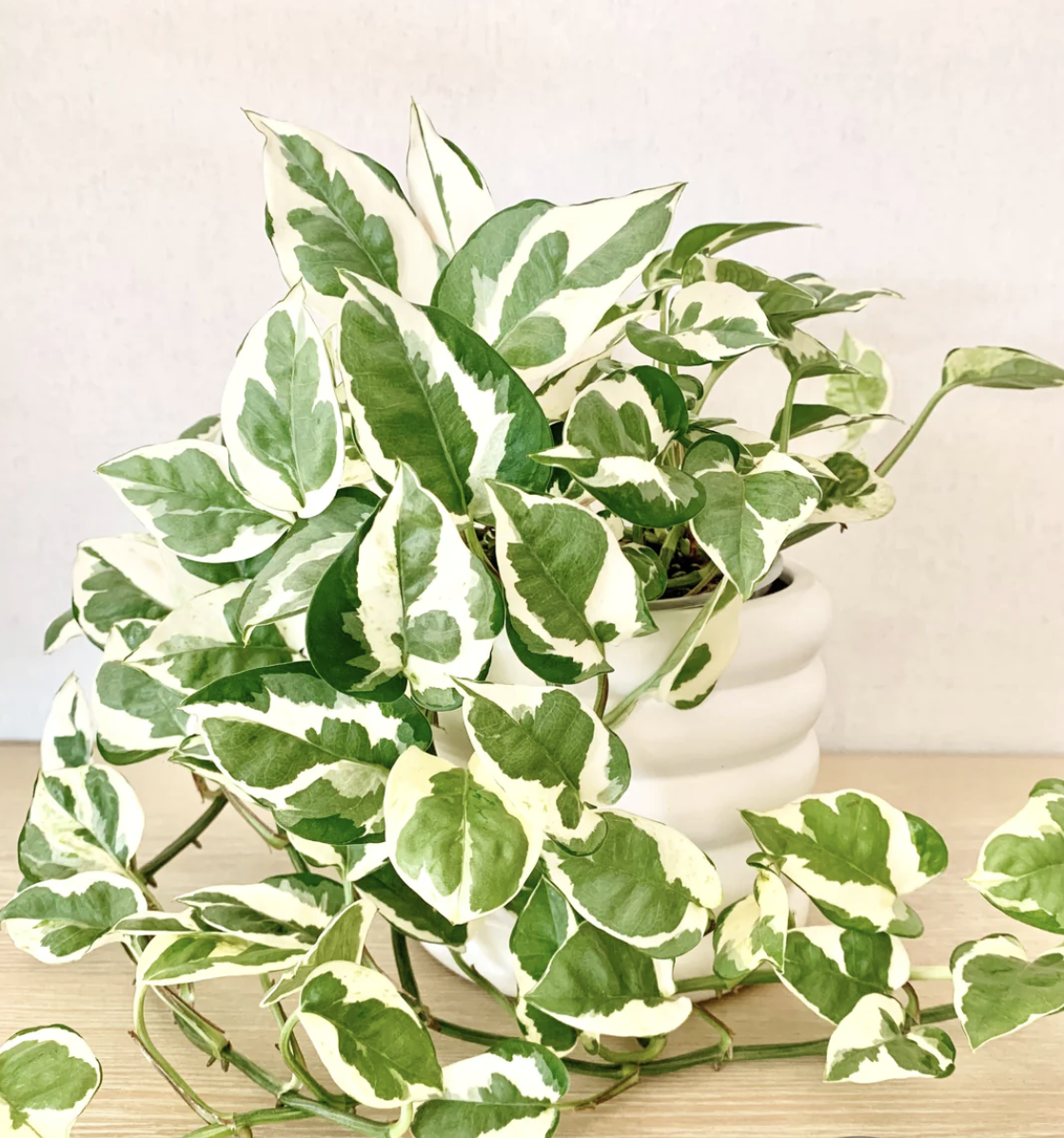
N’joy Pothos
Light: These variegated plants do best with plenty of bright light. A spot that receives several hours of bright indirect light is ideal. Avoid prolonged periods of direct sunlight which can burn this pothos’ delicate leaves. The n’joy pothos can also be adapted to grow in low light, although it may begin to lose its variegation and become more leggy.
Water: When grown indoors, n’joy pothos prefer to dry slightly between waterings. Allow the top 2 to 3 inches of soil to dry and then water well, allowing the excess water to drain from the pot’s drainage holes. These pothos are susceptible to root rot if they are kept in overwatered conditions, so ensure that the soil does not become soggy and waterlogged.
Pet-Friendly: Keep me out of reach of furry friends and little people
N’joy pothos (Epipremnum aureum 'n'joy') are beautiful, delicate pothos that are beloved for their variegated leaves and vining growth habit. A cultivator of the popular marble queen pothos, this pothos variety has smaller, thinner leaves with more pronounced areas of variegation than the marble queen. It was discovered by the University of Florida back in 2002 and has been enjoyed by houseplant enthusiasts ever since. Like other types of pothos, it is known for being low-maintenance and easy to grow indoors.
Sad Plant Signs
Drooping Leaves
This is a sign that your plant is thirsty and in need of a good drink! Water your neon pothos and the leaves should perk back up.
Brown Tips
Underwatering or excessively dry conditions can cause brown tips on your neon pothos’ leaves. Try increasing how often you are watering your plant, and avoid placing your neon pothos near drafty vents or windows.
Leggy Growth
If your neon pothos is starting to look straggly, with long vines that have very few leaves, this is an indication that your plant needs more light. Try moving your pothos to a brighter location.
Information sourced from The Spruce